The difference between a perfectly jammy soft-boiled egg and a chalky overcooked one is often less than two minutes. That narrow margin makes egg timing one of the few kitchen tasks where a countdown timer is not just helpful but essential. This guide covers exact timing for every doneness level, troubleshooting common problems, and the science behind why timing matters so much for eggs.
Egg Timing Chart: From Soft-Boiled to Hard-Boiled
All times below assume large eggs placed into already boiling water at sea level. If you use cold-start methods or cook at altitude, see the adjustments section below.
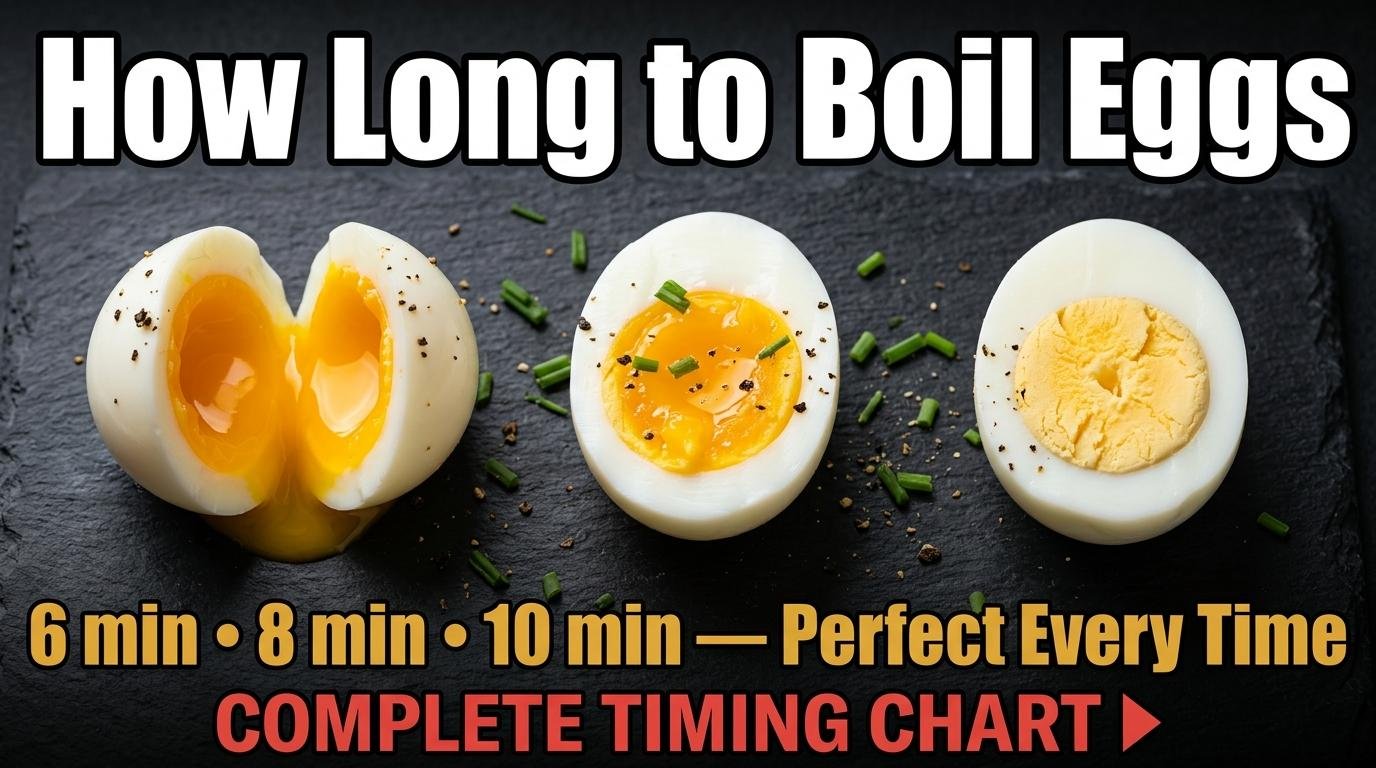
For a runny soft-boiled egg with a liquid yolk and barely set whites, boil for 6 minutes. This is the classic breakfast egg meant for dipping toast soldiers. The whites will be fully set around the edges but may still be slightly translucent near the yolk. Use a 6-minute timer for precision.
A medium-boiled egg at 7 to 8 minutes gives you the jammy, custard-like yolk that has become the gold standard for ramen toppings, grain bowls, and avocado toast. The yolk is mostly set but still has a rich, creamy center that flows when you cut the egg in half. This is the hardest doneness to nail by feel, which is why a timer is non-negotiable. Set a 8-minute timer for consistent results.
Hard-boiled eggs require 10 to 11 minutes for a fully set yolk throughout. The yolk should be pale yellow and firm but not dry or chalky. Going beyond 12 minutes risks the dreaded green ring around the yolk, which is caused by iron sulfide forming when hydrogen sulfide from the whites reacts with iron in the yolk at high temperatures. A 10-minute timer prevents this.
The Ice Bath Rule
Every egg timing guide mentions ice baths, but few explain why they matter so much. Eggs retain significant heat after you remove them from boiling water. A large egg fresh out of the pot will continue cooking internally for another 2 to 3 minutes if left on the counter. This carryover cooking is the most common reason people overcook eggs despite using a timer. The solution is immediate transfer to a bowl of ice water the moment your timer sounds. This stops the cooking process within seconds and also causes the egg to contract slightly away from the shell, making peeling dramatically easier.
Leave eggs in the ice bath for at least 5 minutes before peeling. For meal prep batches, you can leave them in ice water for up to 15 minutes with no negative effects.
Altitude and Temperature Adjustments
Water boils at a lower temperature at higher elevations. At sea level, water boils at 100 degrees Celsius. At 1,500 meters above sea level, it boils at roughly 95 degrees. At 3,000 meters, around 90 degrees. This lower temperature means eggs cook more slowly, requiring you to add time to compensate.
The general rule is to add 30 to 60 seconds per 1,000 meters of elevation above sea level. If you live in Denver, Colorado (approximately 1,600 meters), add about one minute to each timing. In La Paz, Bolivia (approximately 3,640 meters), add two to three minutes. Use ScreenTimer’s countdown timer to set custom durations adjusted for your location.
Starting temperature also matters. Eggs straight from the refrigerator cook differently than room-temperature eggs. Cold eggs placed into boiling water will lower the water temperature momentarily, which can add 30 to 60 seconds to your total cooking time. For the most consistent results, always start with cold eggs from the fridge and use the timings in this guide, which assume cold eggs.
Beyond Boiling: Timing Other Egg Methods
Poached eggs need 3 to 4 minutes in gently simmering (not boiling) water for a runny yolk with set whites. Scrambled eggs should be cooked over medium-low heat for 2 to 3 minutes with constant gentle stirring, removed from heat while still slightly wet since carryover cooking will finish them. Fried eggs take about 2 minutes sunny-side up over medium heat, or flip them for 30 seconds more for over-easy.
For steamed eggs, which many professional chefs prefer over boiling because the gentle heat produces more consistent results, steam for 6 minutes (soft), 8 minutes (medium), or 12 minutes (hard) over rapidly boiling water with the lid on.
Multi-Course Timing
When eggs are part of a larger meal, timing coordination becomes critical. ScreenTimer’s Multi Timer lets you run parallel countdowns for different components. Set one timer for the eggs, another for the toast, and a third for the coffee. All three run simultaneously on one screen, each with its own alarm, so everything finishes at the same time.
Mastering egg timing is less about memorizing numbers and more about building the habit of actually using a timer every time. The eggs do not care whether you think you can eyeball it. Set the timer, trust the timer, and enjoy consistently perfect eggs.

Leave a Reply