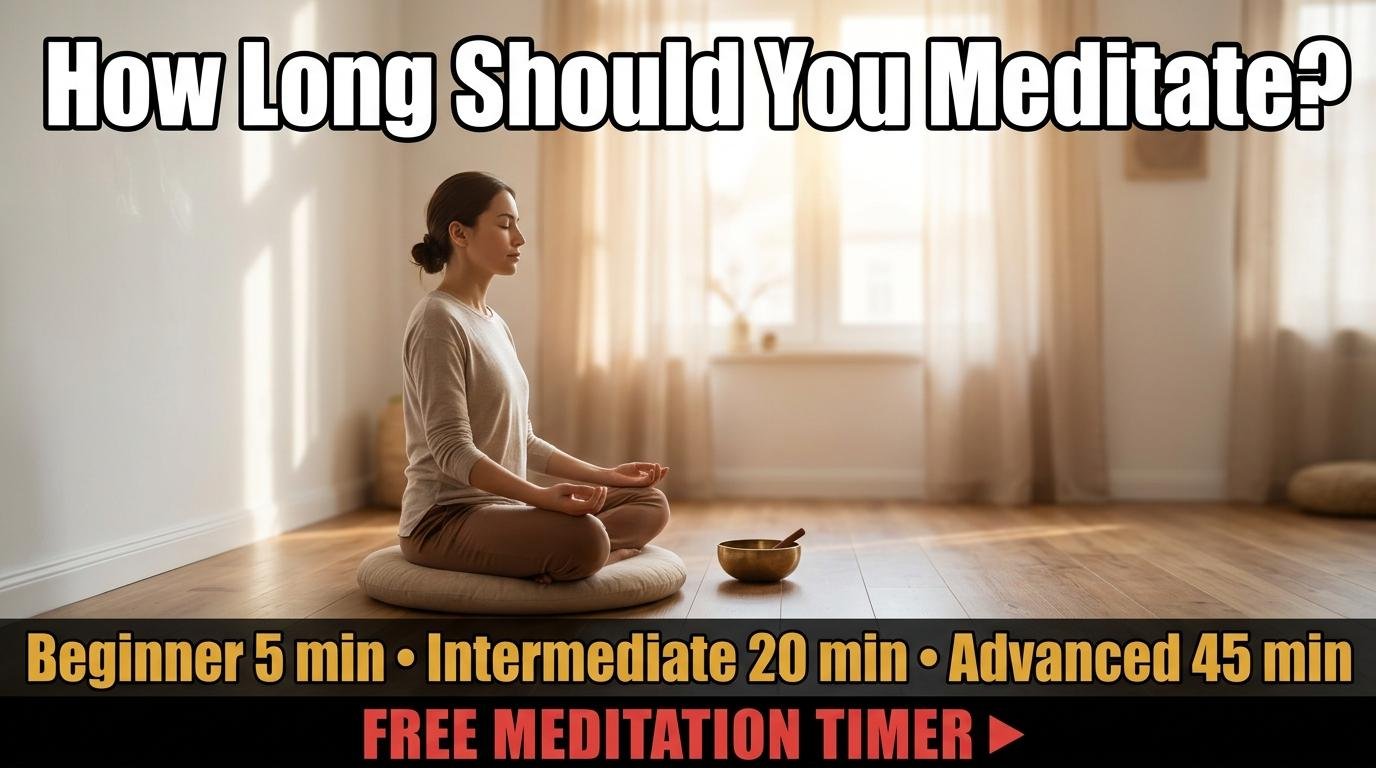
One of the most common questions new meditators ask is how long they should sit. The honest answer is that any amount of meditation is better than none, but the science and tradition of contemplative practice offer more specific guidance depending on where you are in your journey. This guide covers optimal session lengths, why timing matters, and how to use a simple timer to build a consistent practice without the complexity of dedicated meditation apps.
Why You Need a Meditation Timer
Without a timer, your meditation session becomes a mental negotiation. Part of your mind monitors the clock, guessing whether enough time has passed, wondering if you should peek at your phone. This clock-watching is the opposite of what meditation aims to develop. A timer eliminates this entirely. You set the duration, close your eyes, and surrender to the practice knowing the timer will handle the ending. Your only job is to be present.
The ideal meditation timer has three qualities: a gentle start signal, silence during the session, and a soft ending tone that does not jolt you out of a calm state. ScreenTimer’s countdown timer with the Meditation Bowl or Gentle Chime alarm sound meets all three requirements. Set your duration, select the sound in Preferences, and the timer runs silently until it rings you back with a warm, non-startling tone.
Beginner: 5 to 10 Minutes
If you have never meditated before or are returning after a long break, start with 5 minutes. This sounds trivially short until you actually try sitting still with your eyes closed for 300 seconds. For most beginners, 5 minutes feels surprisingly long. The mind wanders constantly, the body fidgets, and the urge to check how much time remains is intense.
Five minutes is long enough to learn the fundamental skill of meditation: noticing when your mind has wandered and gently bringing attention back to the present. This returning is the practice. It is not a failure to get distracted; the moment of noticing the distraction is the mental pushup that builds the muscle of awareness. Set a 5-minute timer and do this once per day for two weeks before extending.
After two weeks of consistent 5-minute sessions, extend to 10 minutes. The additional time allows you to move past the initial restlessness and occasionally touch brief moments of genuine stillness. These moments are what keep meditators coming back.
Intermediate: 15 to 25 Minutes
Once you can sit comfortably for 10 minutes without constantly watching the clock, extend to 15 to 20 minutes. This is where meditation begins to produce its most well-documented benefits: reduced cortisol levels, lowered blood pressure, improved emotional regulation, and changes in brain structure visible on MRI scans.
Research from Harvard Medical School found that eight weeks of daily 20-minute meditation sessions produced measurable increases in gray matter density in brain regions associated with memory, empathy, and stress regulation. Participants who meditated less than 15 minutes per day did not show the same structural changes, suggesting that 15 minutes may be a minimum threshold for neuroplastic benefits.
At this level, experiment with interval timers within your session. Set a 20-minute timer and add a gentle bell at the halfway point. The mid-session bell serves as a mindfulness checkpoint: when you hear it, notice where your attention is, take a deep breath, and re-settle into the practice. This interval technique comes from Zen Buddhist training where bells punctuate meditation sessions to maintain alertness.
Advanced: 30 to 60 Minutes
Experienced meditators who have been practicing consistently for six months or more often find that 30 to 45 minutes is their sweet spot. Sessions of this length allow access to deeper states of concentration and insight that shorter sessions rarely reach. The first 10 to 15 minutes function as a settling period, and the actual depth of practice begins in the second half of the session.
Retreat-style practice uses 45-minute sitting sessions alternating with 15-minute walking meditation periods, repeated throughout the day. This structure from the Theravada Buddhist tradition is designed for intensive practice and is not necessary for a daily home practice. For daily use, set a 30-minute timer and sit once in the morning before the demands of the day begin.
Building a Consistent Practice
Consistency matters far more than duration. A daily 10-minute practice produces more benefit over a year than occasional 45-minute sessions. The most effective strategy for building consistency is habit stacking: attach your meditation session to an existing daily habit. Meditate immediately after your morning coffee, or set a daily alarm at the same time each day as your meditation reminder.
Track your sessions to build momentum. Even a simple checkmark on a calendar creates a visual chain that you become reluctant to break. After 30 consecutive days, the practice stops feeling like a chore and starts feeling like a natural part of your routine.
The best meditation timer is one you will actually use every day. A free online countdown timer with a gentle alarm sound works just as well as a dedicated meditation app with subscriptions, guided sessions, and gamification features. What matters is not the tool but the consistency of the practice itself.

Leave a Reply